
Nuclear Density Gauge Best Practices: Accuracy Tips for Soil and Asphalt
Nuclear density testing is most likely in the top three most requested tests for material testing laboratories. Density or compaction testing is usually required for soils, aggregates, and asphalt. Interestingly enough, "soil compaction" gets confused with "soil borings" and "soil bearing." We have not been able to identify the root of this confusion but will do a blog about it when research is completed. Here, we are talking density/compaction.
Density testing, commonly known as compaction testing (ASTM D6938), aims to measure how effective the compaction effort has been over the material. Sometimes it is too loose, sometimes too dense, and there is always a target for that density to be just right. There are various methods approved by ASTM and local agencies to measure the density or compaction of a material. The most common method for nuclear density testing across different materials is the use of a nuclear density gauge. Don't get alarmed! The nuclear word is a big word, but the radioactive source is significantly small and poses little to no risk for the operator and those around it when properly used and safety procedures are followed.
We want to highlight some of the best practice items when using one of these gauges.
Training
Training is of the utmost importance anytime, but with a radioactive device at hand, training becomes critical. Make sure the operator is properly trained to effectively operate the gauge and understands the risks. The operator should have a basic understanding of how the device works and how to troubleshoot it in the field to ensure accurate testing.
In addition to operational training, the gauge operator must be proficient in the safety procedures associated with it. Transportation, storage, and what to do in case of an accident are only a few of the processes the operator should know.
Equipment
Different from other pieces of equipment in the lab, this one we need to know where it is at all times and who has it. The typical "I don't know" response when everyone is looking for the DCP or the hand auger does not fly with these gauges. Accountability and traceability of possession is important. Omnant includes an inventory tracking feature where a Q-bar can be added to the gauge and work as a sign-in/out sheet. Make sure to track usage and maintain an up-to-date log detailing who, when, and where.
Gauges should be calibrated frequently. The frequency varies per jurisdiction, but generally they are calibrated yearly. They must also be "leak tested" every six months per NRC requirements to ensure the radioactive source is not leaking any material.
Experience & Proficiency
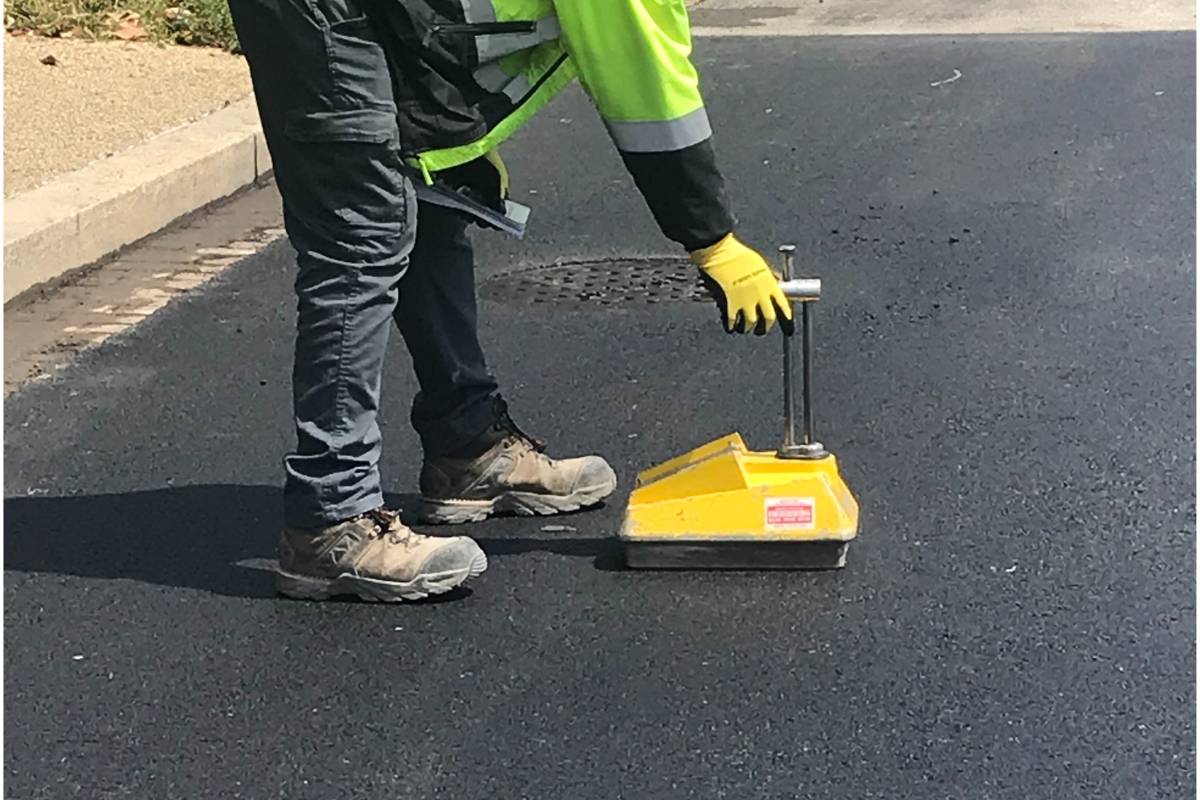
It is important that all technicians receive enough on-the-job training in addition to theoretical training. Both are important and complement each other. Excluding some special cases, these gauges are used for testing the compaction of asphalt and soils/aggregates. They can be used in two modes: Backscatter and Direct Transmission. Backscatter is mostly for asphalt; in this mode the source or "rod" stays flat with the bottom surface of the gauge. Direct Transmission involves lowering the source or "rod" into the compacted soil or aggregate material to be tested. Proficient technicians should understand when and why each mode is used. Technicians should also understand the standardization process of the gauges as well as the elements that can interfere with the readings.
Nuclear density testing results depend on the input information used for comparison. The gauges provide a percentage of compaction in relation to the maximum theoretically achievable compaction effort. In soils and aggregates, a Proctor test must be completed prior to the compaction test. The Proctor test, in accordance with ASTM D698 or ASTM D1557, determines the maximum theoretically achievable compaction for a specific material in a laboratory environment. This number is entered into the gauge and is used to compare with the field compaction. Technicians should be able to recognize typical values for local materials, which helps the team ensure readings are within acceptable ranges.
Nuclear density gauges are great tools that speed up the testing process, but the appropriate procedures must be followed. Safety is of the utmost importance when operating one. Omnant is here to make reporting faster, accurate, and standardized. We also assist laboratory owners and managers with detailed accountability and traceability of gauge possession. Want to know how it works? Schedule your demo today!
The Concrete Cylinder Testing Workflow Challenge
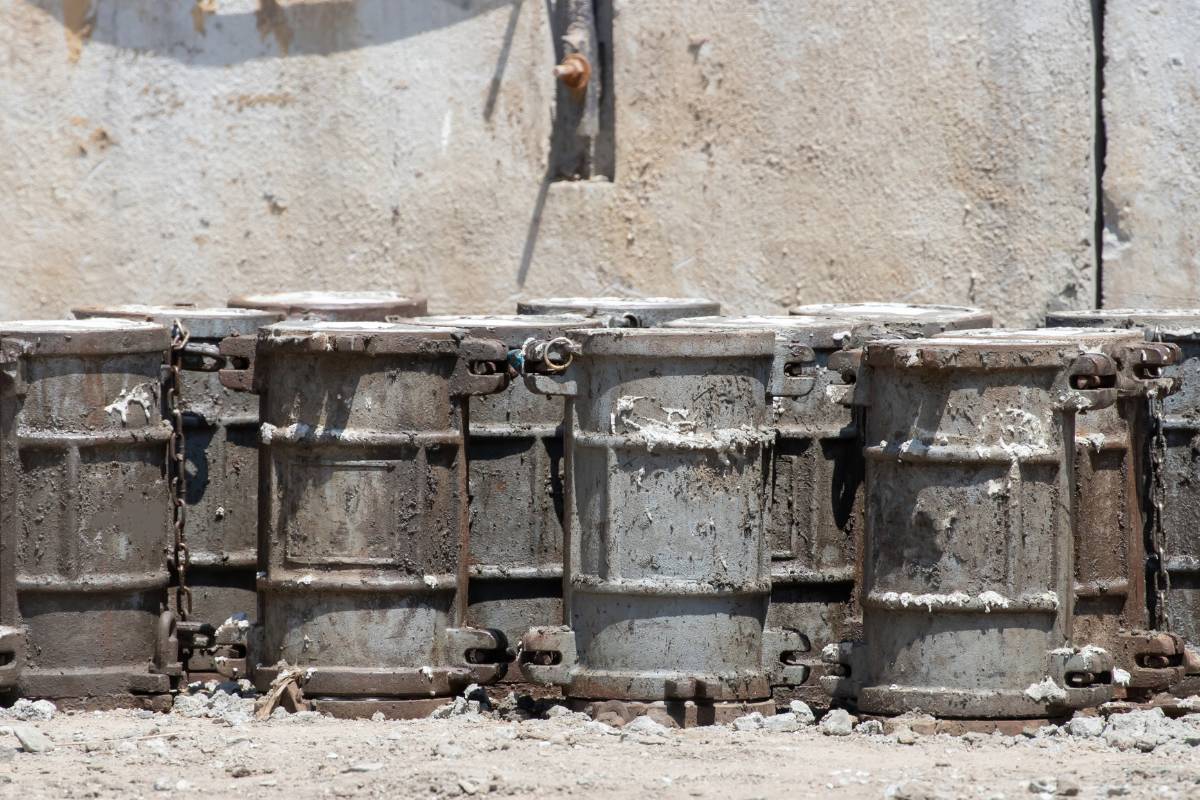
Usually a technician, with a valid Field Testing Certification from the American Concrete Institute (ACI), will be on site using field inspection software and cast the samples. You can check all current ACI Certification holders here: www.concrete.org/verify. Samples are properly made with construction materials testing equipment and stored for initial curing. After the samples are made at the site, multiple logistical and operational challenges arise.
Common Challenges in Concrete Cylinder Testing:
- Documenting the information received from the field technician
- Picking them up and details
- Location of the samples
- Route, drop-offs, special instructions and operational advantage
- Documenting compliance
Omnant is built on purpose. The goal is to assist testing laboratories in operating efficiently, more profitably and converting challenges into opportunities. More often than what many testing labs would want to acknowledge, cast samples are forgotten. Samples are left in the field until someone sees them and wonders why they're still there. Sometimes, testing labs notice the missing samples when the client calls eight days later to know the strength at seven days (ouch!).
Eliminating Lost Samples with Smart Scheduling
First things first, with Omnant, there are no more missing samples! Our scheduling system and work order framework remind the scheduler and the project manager that samples are needed in order for the technician to complete their day. If samples were not cast for a particular reason, that needs to be entered in the system.
All samples need to be assigned to someone in order to pick them up, therefore, the schedule for the field staff can't be sent if the sample pickups aren't assigned. These are built-in safeguards to ensure no sample is left behind.
How Omnant Optimizes Concrete Cylinder Testing Workflows
1. Documenting the Information Received from the Field Technician
The information received from the field technician is entered in Omnant by the scheduler or the project manager. Omnant includes specific blanks that must be completed in order for the technician to finish their day.
2. Picking Them Up and Details
This is definitely the most important part! Get those samples! It's easy to say but some complications come with that. Omnant includes additional information for the pick-up person to know the kind of samples to pick up, what kind of protection is needed and more importantly, the number of samples to retrieve.
Jobsites are never the same. They're like a living organism. Materials are moved, entrances are closed, temporary structures seem to appear out of thin air and can be an unknown world for infrequent visitors. Being able to provide details to the pick-up personnel is critical to ensure accuracy on the pickups.
Notes like: "Do not take samples in the gray mold, those belong to QA." "Please bring the cure box back to the lab" "Don't forget to download the thermometer data" and many others help pick-up personnel navigate the process efficiently.
3. Location of the Samples
Sometimes it's easy. In an urban setting, an address will suffice. On a highway project, station marking should do it. On large projects, multiple cure boxes or sample storing stations are scattered around the site. Which one has the samples? Omnant allows the scheduler to include coordinates.
When the pick-up personnel get their schedule, they simply click or tap on the hyperlink and their preferred navigation app will open. The coordinates will take them right to the samples. Similarly, if the samples are regularly stored in the same location, this location can be saved in the system and used repeatedly without the need of entering the address every time, making it easier on the scheduler.
4. Route, Drop-Offs, Special Instructions and Operational Advantage
At the office, as more and more pickup requests are received, the scheduler can organize the pickups in an efficient manner. The scheduler, in collaboration with the project and lab manager, can schedule priority pickups (early breaks, special samples for overnight patches, samples that require a chain of custody, etc.).
As seen before, the ability to include special instructions helps the pickup personnel navigate the projects to retrieve the samples and bring them back to the lab safely. In general, most of the samples will come back to the lab but in some instances, the samples must go somewhere else. Specific drop-off locations can be set for specific samples. This simplifies the route and ensures added efficiency to the work of the day.
The operational efficiency comes from the availability of real-time information. In the lab, the office or lab manager knows ahead of time how many samples are coming in and their priority level. This allows them to instruct lab personnel to clear more floor space or cure room space. We've all been there. Hot day, middle of the summer and the pickup guy shows up with "a few hundred cylinders." Surprise! With Omnant, those surprises are a thing of the past. Now we know and can prepare for it.
5. Documenting Compliance
In general, the samples are picked up and brought back to the lab and the process continues until they're tested and reported. In some cases, extra documentation is needed. Omnant allows you to generate reports for sample pickups.
The purpose? Client requests. Other purpose? Let's "hypothetically" say that a shotcrete panel pickup was scheduled. Your pickup person arrives on site and finds the shotcrete panel, thanks to the coordinates being in his Omnant schedule, and the sample is not in the condition that it was cast. Your technician notices that one of the bulldozers ran over the panel and it's now in pieces.
Definitely easier to load on the truck but not necessarily "fit for testing" nor "representative of the material placed." This needs to be documented and Omnant allows you to do that and you can include pictures! Similarly, temperature conditions can be documented as part of the pickup reports.
One Platform for Complete Concrete Cylinder Testing Management
Disconnected systems like spreadsheets or databases don't provide real-time visibility into your pickup workflow. Unlike a comprehensive laboratory information management system, these tools leave you guessing where samples are, whether they've been retrieved, and what condition they're in when they arrive at the lab.
Omnant eliminates the guesswork. Every sample is tracked from the moment it's cast to the moment it's tested. Your team gets precise locations, detailed pickup instructions, and the ability to document sample conditions with photos. No more lost cylinders. No more surprise calls from clients asking about seven-day breaks on day eight. No more scrambling to figure out what happened.
And billing? We've got you covered. Bill all your pickups and laboratory testing directly from the same platform where you manage the work.
Stop Losing Samples. Start Running a Tighter Lab.
Schedule your Omnant demo today and see how construction materials testing software built specifically for your workflow can transform your operations.
Share this Post:
Related Blog Post

Start streamlining your inspection and CMT testing processes with Omnant's integrated solution. Contact us today to learn how our software can support your goals for operational excellence.