
Concrete Strength Testing Methods: Why One Form Never Fits Every Test
Concrete strength testing is one of the highest-volume services a CMT lab performs. Day in, day out, technicians cast cylinders, schedule breaks, and document results. The ASTM procedures haven't changed much in decades. But the reporting that surrounds them? That's where things get complicated.
Compressive strength. Modulus of elasticity. Grout specimens. Each test type captures different data, follows different protocols, and often needs to be reported in a different format depending on the client, the project specs, or the local DOT. Labs that try to manage all of that with a single generic form (or worse, a paper ticket and a spreadsheet) spend more time reformatting data than they do testing.
This blog walks through the most common strength testing methods, what makes each one distinct, and how purpose-built concrete testing software with custom form capabilities keeps your lab running without the double-entry headaches.
Why Concrete Strength Testing Methods Vary
Concrete is everywhere. Foundations, slabs, columns, masonry walls, drilled shafts. The testing requirements for each application aren't the same. A residential slab and a bridge deck both use concrete, but the test programs, specimen types, break ages, and reporting requirements look very different.
Add in state DOT specifications, project-specific owner requirements, and AASHTO or ASTM compliance tracking, and you end up with a lab that's juggling dozens of form variations for what feels like the "same" test. That's not inefficiency on your team's part. That's just the nature of concrete strength testing methods in a real-world CMT operation.
Compressive Strength Testing (ASTM C39)
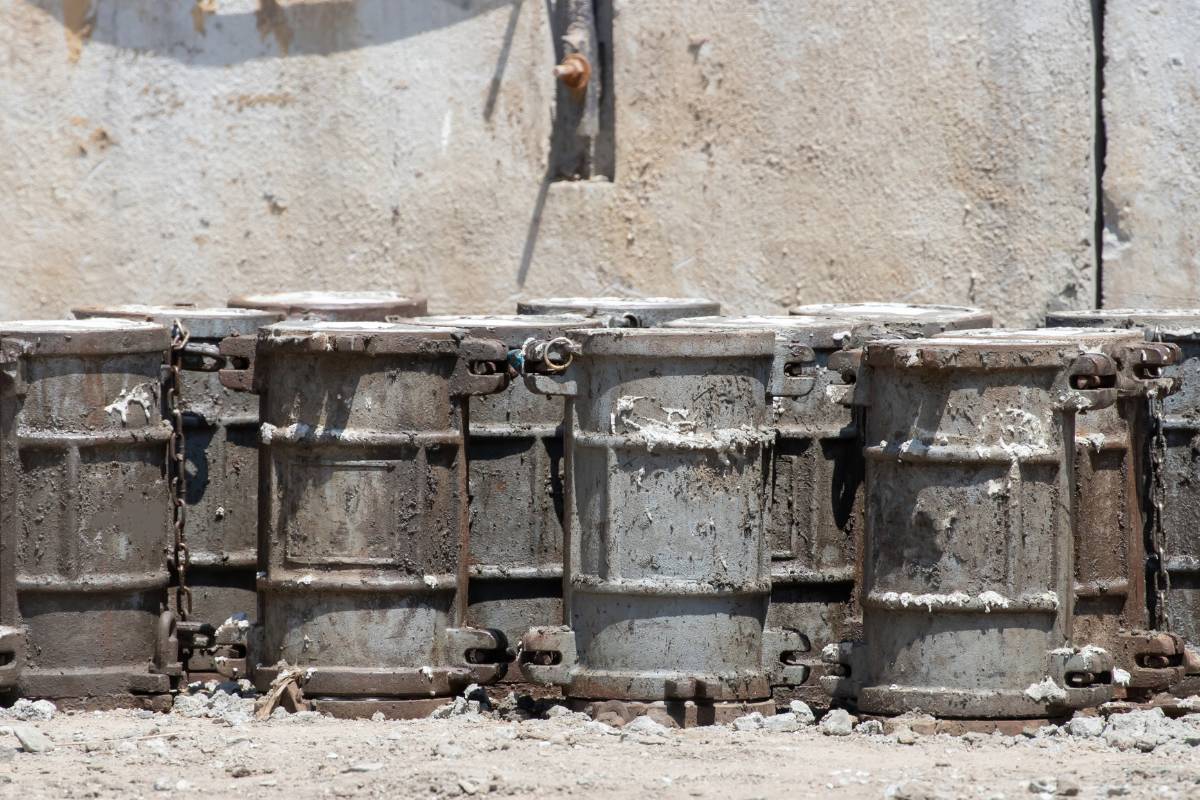
Compressive strength is the most common concrete test performed by CMT labs. A set of cylindrical specimens, typically 4x8 or 6x12 inches, are cast in the field, cured, and broken in compression at set intervals: usually 7, 14 and 28 days, though project specs sometimes add breaks at 3, 56, or 90 days.
The formula is straightforward: divide the maximum load at failure by the cross-sectional area of the cylinder. The result is compressive strength in psi. Most design specifications reference the 28-day compressive strength as the benchmark for structural compliance.
What's not straightforward is the documentation. A compressive strength report needs to capture:
- Mix design and specified strength (f'c)
- Specimen dimensions and curing conditions
- Break age and test date
- Load at failure and calculated psi
- Fracture type (cone, shear, splitting, columnar)
- Technician certification and equipment calibration status
Now multiply that by 20, 50, or 200 sets per week across multiple projects and clients. Each client may want results in a different format. State DOTs often require proprietary spreadsheet templates, filled out in a specific layout and uploaded to a government portal. Without automated form population, someone on your team is re-entering every data point by hand.
Omnant's compressive strength forms pull data directly from the schedule and the lab. Mix design, mix producer, technician assignments: all pre-populated. Test results flow in from integrated lab equipment. The report is ready without anyone retyping a number.
There's a consistency payoff here that's easy to overlook. With Omnant, you set up your reporting format once and it stays that way for every report that follows. Spreadsheets don't work like that. Each one gets formatted by hand, which means reports for the same test can end up looking different depending on who built them and when. A form that's defined once and reused brings uniformity and keeps you aligned with reporting standards across every job.
Modulus of Elasticity Testing (ASTM C469)
Modulus of elasticity (MOE) testing goes a step beyond compressive strength. Where a break test tells you how much load concrete can take before failure, MOE testing measures how the concrete deforms under load, its stiffness, essentially. This matters for structural design, particularly on projects where deflection is a concern, like a skyscraper.
MOE testing uses the same cylindrical specimens as compressive testing, but the procedure involves measuring stress and strain at controlled load increments before the specimen is taken to failure. The output isn't just a psi value. It's a stress-strain relationship used by structural engineers in their calculations.
The reporting form for an MOE test looks nothing like a standard break report. It needs fields for modulus calculations, load increments, strain gauge readings, and longitudinal deformation data. A generic compressive strength form doesn't cut it. Labs that perform MOE testing regularly need a dedicated form that captures the right data points and calculates the right outputs automatically.
Omnant's forms are fully customizable to fit the test, and when paired with a connected testing system like ForneyVault, data pulls straight from the testing machine into your report. Most fields populate on their own, so the stress and strain data your engineers need lands in the right place without manual entry.
Masonry Grout Testing (ASTM C1019)
Grout testing is its own category with its own specimen type and its own documentation requirements. Under ASTM C1019, grout specimens are cast using absorptive molds that simulate in-place absorption conditions, typically a box made from masonry units or block. Specimens are prisms, not cylinders.
Because grout mixes are different from structural concrete (higher water content, finer aggregate), and because the specimen geometry is different, grout test reports have a distinct set of required fields. The grout mix, absorption correction factors, specimen dimensions, and compressive strength results all need to be documented in a format specific to ASTM C1019, not ASTM C39.
Labs that test both concrete and masonry grout can't use the same form. Omnant's forms can be customized to fit each test type, so you can set up a dedicated grout form that captures the right fields, and your technicians are always documenting the right data for the right test without confusion or workarounds.
The DOT Specifics
State DOTs are in a category of their own when it comes to reporting requirements. Many states require labs to submit results in proprietary formats: specific spreadsheet layouts, calculated fields, upload-ready files. The data is the same data your lab already collected. But the DOT wants it presented their way, in their template, calculated their way.
Without connected forms, that means a technician finishes a report in your lab testing and reporting system, then opens a separate DOT spreadsheet and re-enters everything. Manually. With manual calculations that vary by technician.
One lab Omnant worked with was doing exactly that for their local DOT. The manual re-entry was generating inconsistent calculations and triggering constant revision requests and project delays. Omnant built them connected forms with dual outputs: a PDF for internal records and a formatted DOT spreadsheet ready to upload without modification. The lab saved more than 4 staff hours per week, over 200 hours annually. That's equivalent to a full month of productive capacity recovered without adding a single staff member.
It's worth noting that the data itself often runs the other way too. Omnant's own reports frequently carry more detail than a DOT template has room for, to the point where labs end up trimming information down to fit the fields the DOT provides. The limit isn't what your lab can capture. It's what the template can hold.
That's what custom forms actually solve. Not just a cleaner report layout. A fundamentally different workflow. A purpose-built efficiency that allows your firm to grow and expand accurately.
Custom Forms Aren't a Workaround, They're the Point
Generic CMT software treats forms as an afterthought. Pick a template, fill it in, export a PDF. But when your lab is running compressive strength tests for a commercial GC, MOE tests for a structural engineer, and grout tests for a masonry contractor, all in the same week, a one-size form is a liability, not an asset.
Think about what manual workflows actually cost. If your team saves just 30 minutes per project on reporting, that's 10 hours recovered weekly on a typical test volume, over 500 hours annually. At standard billing rates, that's real capacity that can go toward additional work rather than reformatting spreadsheets.
Omnant's approach is different. Our team works with you to build or recreate the exact forms your lab needs: standard ASTM-compliant templates, DOT-specific formats, owner-required layouts, or anything else your clients require. Those forms connect directly to your field inspection data and lab results so fields populate automatically. Calculations run consistently across every technician. Reports go out faster.
Like any good laboratory information management system, Omnant also tracks every change made after report approval automatically, giving you a complete audit trail without maintaining manual change logs. This is a requirement under AASHTO R18 and ASTM E329.
The test procedure stays the same. The documentation finally keeps up.
Your Forms Should Work as Hard as Your Lab Does
If your lab runs 20 cylinder breaks a week or 2,000, the right forms make the difference between a reporting backlog and a well-run operation. Schedule a demo to see how Omnant handles concrete strength testing documentation from the field all the way to the final report.
Share this Post:
Related Blog Post


Start streamlining your inspection and CMT testing processes with Omnant's integrated solution. Contact us today to learn how our software can support your goals for operational excellence.